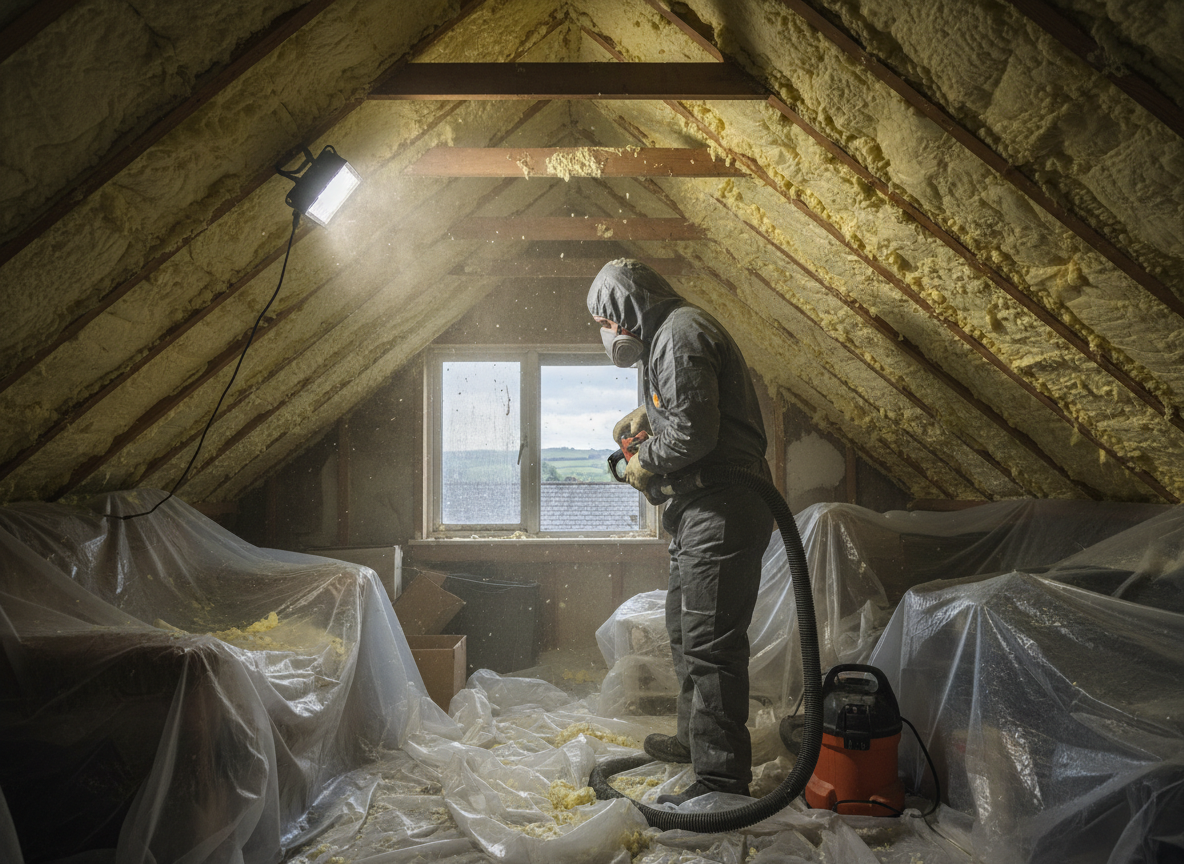
Saddleworth villages such as Uppermill, Delph and Dobcross sit on the edge of the Pennines with many Victorian stone terraces and former mill cottages built against the hillside. These older properties often have spray foam installed under slate roofs that now traps moisture against the stone, leading to rot in joists and poor ventilation. EcoBarrier Pros removes the foam carefully so the original roof structure can dry out properly without damaging the thick local stonework.
Narrow lanes off the A62 and steep drives common around Dovestone Reservoir and Saddleworth Moor mean standard equipment must be carried in by hand or smaller rigs. Winter rain and high winds across the moors push water under eaves, so removal work here focuses on clearing saturated foam sections first and checking for hidden damp in the rafters before any new insulation goes back in.
Homeowners along High Street in Uppermill and around St Chad's Church regularly call for help when foam starts to smell musty after heavy Pennine downpours. The team works from the 12 Station St base and can reach these Saddleworth addresses at any hour to inspect and strip out the material while protecting the surrounding stone and timber.
Around Saddleworth
We regularly work near:
- 📍Uppermill High Street
- 📍Dovestone Reservoir
- 📍Saddleworth Moor
- 📍St Chad's Church Uppermill
- 📍Delph village centre
- 📍Dobcross Square
Spray Foam Removal in Saddleworth — Local Notes
- •Thick local stone walls in Delph cottages hold moisture longer after foam removal, requiring extra drying time before re-insulation.
- •Narrow cobbled access in Dobcross forces smaller tools and more manual labour to avoid blocking village lanes.
- •High rainfall on Saddleworth Moor edges often leaves roof voids saturated, so crews check for hidden rot in rafters during every job.
- •Slate roofs common on Uppermill terraces can shift when foam is pulled, needing careful support to prevent tile damage.