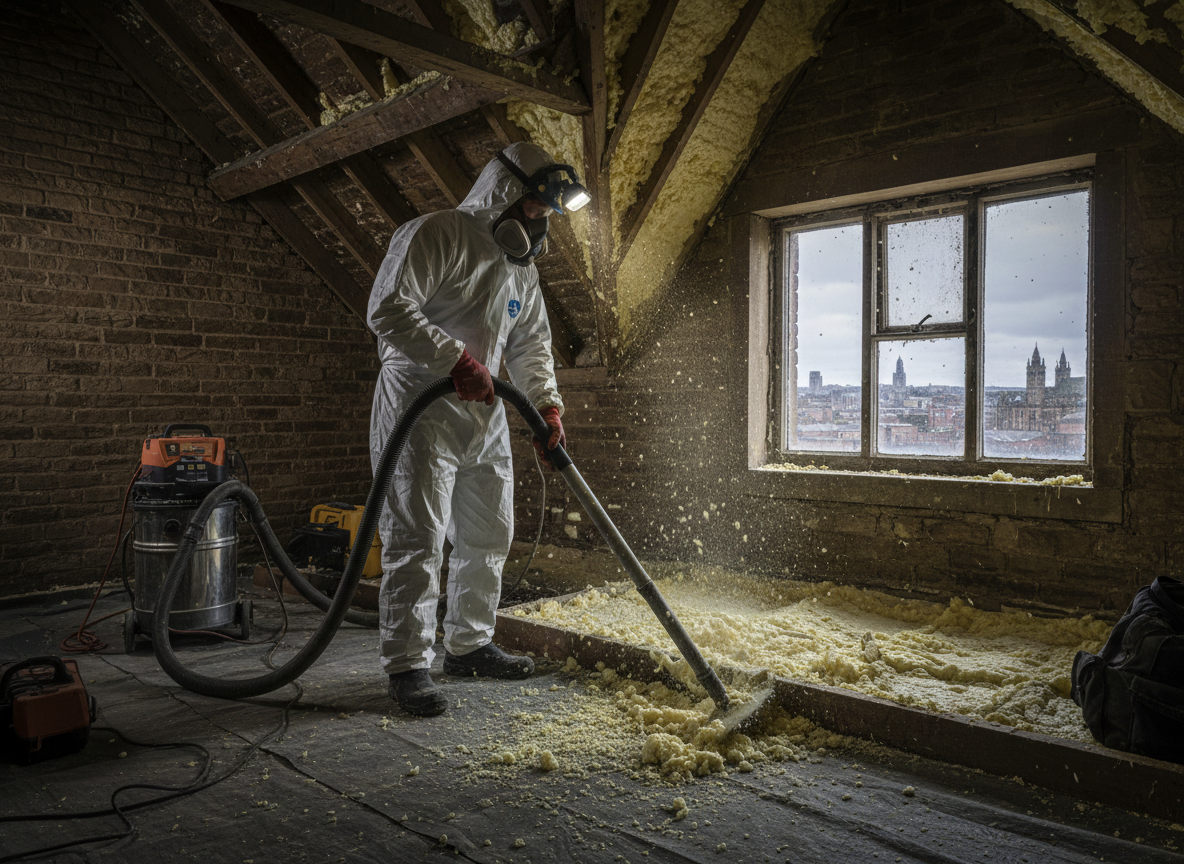
Huddersfield's Victorian terraces and early 20th-century stone homes in neighbourhoods such as Marsh, Paddock and Lockwood often received spray foam insulation in the 2000s to meet energy targets. The region's frequent Pennine rainfall and poor roof ventilation mean the foam frequently absorbs moisture from above, bonding tightly to lath, plaster and timber joists. Removal therefore requires staged drying periods before mechanical extraction to avoid pulling ceiling finishes or spreading mould spores into living spaces.
West Yorkshire Building Control expects any replacement insulation to meet current Part L standards, so crews must document the original foam depth and substrate condition before work begins. In narrow ginnel-access properties around the town centre, containment sheeting and negative-air machines are essential to prevent dust migration into adjacent homes. Homeowners attempting DIY removal commonly damage historic lathe ceilings or leave residue that later causes condensation issues in the rooms below.
24/7 response is often triggered by sudden roof leaks after heavy rain or when tenants report respiratory problems linked to degraded foam. Crews carry portable dehumidifiers and air scrubbers sized for typical two-up two-down layouts, allowing safe overnight work without displacing residents. All removed material is bagged on site and taken to licensed West Yorkshire transfer stations rather than left for council collection.
Technician insight
In Huddersfield, the thing that catches most people out with 24/7 Spray Foam Removal is how the frequent rainfall and older stone-built terraces around Marsh and Paddock let moisture sit behind the foam, turning a standard scrape into a two-day drying job before the material will release cleanly from the joists.
Night Callout in Lockwood
A tenant in a Lockwood stone terrace reported breathing issues after a roof leak. Inspection found saturated spray foam bonded to damp joists. Crews contained the loft, extracted the material overnight using staged drying passes, and cleared the space for safe use by morning.
How it works
- 1
Site Assessment
Inspect loft and wall cavities, check for moisture, note access constraints typical of Huddersfield terraces.
- 2
Containment Setup
Install sheeting, negative air and dust barriers to protect adjacent rooms and neighbouring properties.
- 3
Foam Extraction
Remove saturated material in controlled passes, allowing drying time between layers where Pennine damp has penetrated.
- 4
Substrate Cleaning and Disposal
Scrape residue, treat affected timber, bag waste and transport to licensed local facilities.
- 5
Final Ventilation Check
Restore airflow and confirm the space meets safe re-occupancy standards before handover.
Pricing
Cost depends on property age, foam depth and access difficulty; upfront quotes provided after inspection.