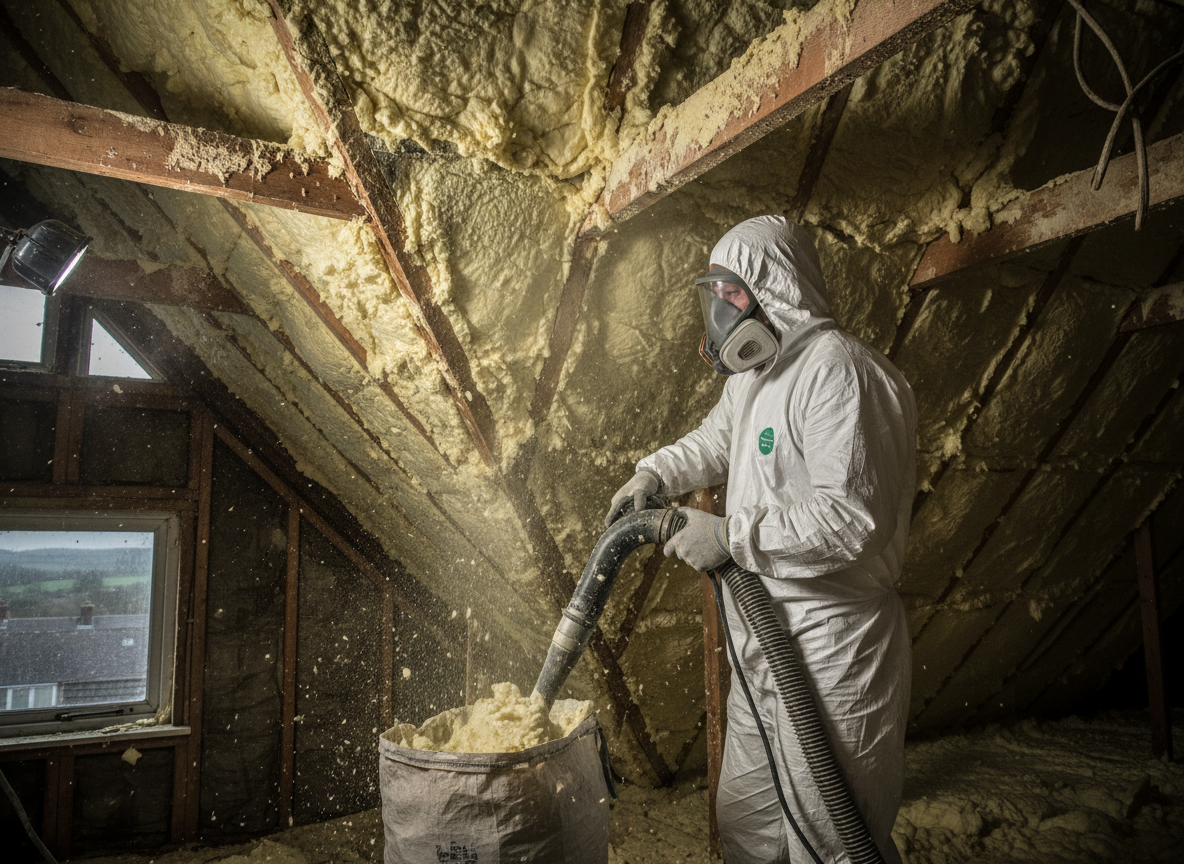
Huddersfield's older stone terraces and Victorian properties often have narrow, low-pitched roof voids with limited access hatches. Spray foam applied directly to rafters in these spaces traps moisture against timber and can block the airflow that traditionally kept slate roofs dry. Removal requires careful cutting and vacuum extraction to avoid damaging original lath and plaster ceilings below while preventing foam dust from settling through the house.
West Yorkshire weather brings frequent driving rain and rapid temperature swings that highlight any remaining foam residue. Once the foam is gone, many attics need new ventilation paths restored along the eaves and ridge to prevent condensation on the underside of the roof. Technicians must work around chimney stacks, shared party walls, and electrical cables that run through these confined spaces without disturbing neighbours in attached properties.
Proper disposal of the removed material matters because cured polyurethane does not break down in landfill. Crews bag and remove every fragment the same day, then check for any residual adhesion that could affect new insulation choices. Homeowners in areas like Marsh and Lindley frequently request this service after noticing musty smells or higher heating bills once the foam starts to degrade.
Technician insight
In Huddersfield, the thing that catches most people out with attic spray foam removal is how the foam fills the narrow eaves on stone terraces, cutting off the airflow that these 100-year-old roofs rely on. Once winter temperatures drop and warm moist air from the house hits the cold slates, condensation builds fast if the vents are not reopened properly.
Marsh Terrace Moisture Issue
Homeowner noticed damp patches on bedroom ceilings after foam had been in place for several years. Inspection found foam blocking the eaves on a shared Victorian terrace, trapping moisture against the rafters. We removed the foam in sections, restored eaves ventilation, and cleared all debris the same day, leaving the roof space able to breathe again.
How it works
- 1
Site Inspection
Assess attic access, foam depth, roof condition and any existing damp or electrical issues in the Huddersfield property.
- 2
Containment Setup
Protect living areas below with dust sheeting and negative air pressure to stop foam particles migrating through the house.
- 3
Foam Extraction
Cut and vacuum the spray foam in sections, working from the eaves inward while preserving rafters and original roof structure.
- 4
Clearance and Ventilation Check
Remove all debris, inspect for hidden residue, and advise on restoring eaves and ridge ventilation suited to local weather patterns.
Pricing
Upfront quotes after inspection; cost driven by attic size, foam thickness and access difficulty in older Huddersfield stock.