2026-10-23 ·
Spray Foam Removal Considerations For Older Huddersfield Mill Conversions
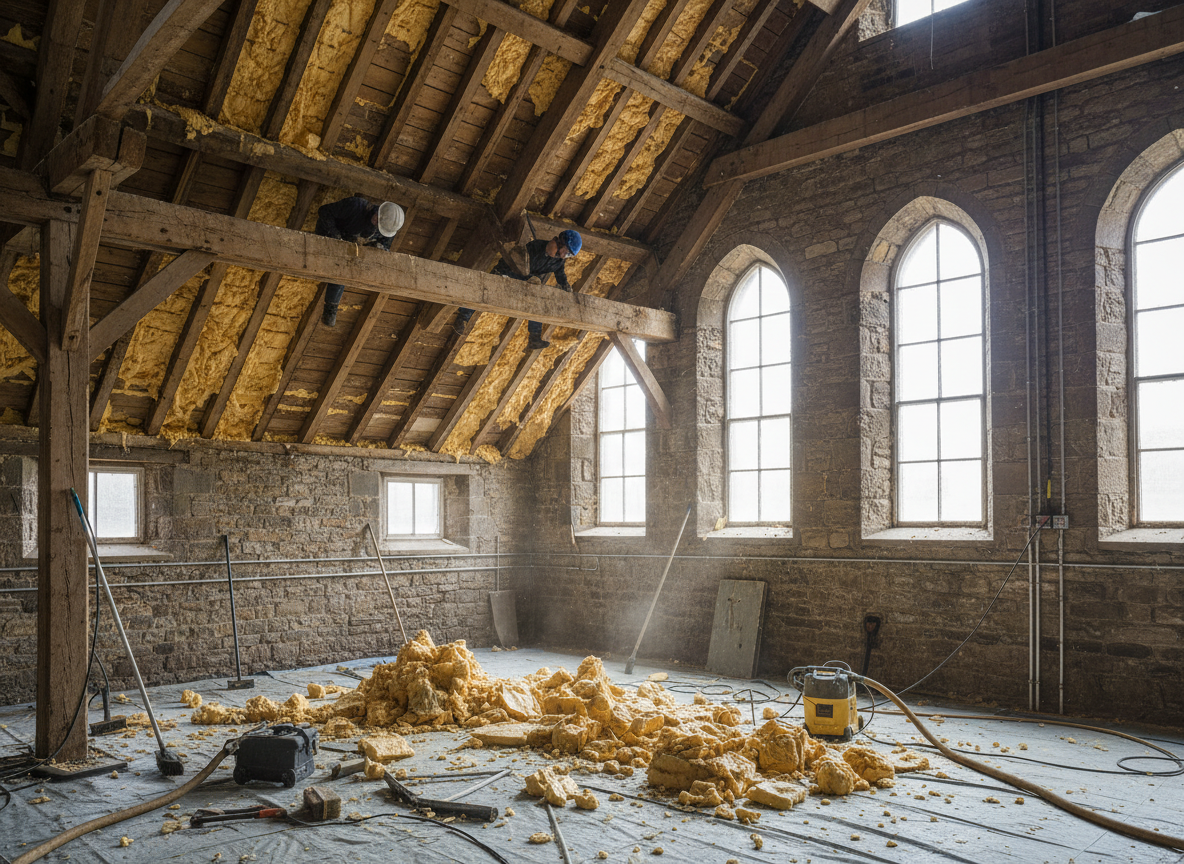
Spray foam removal in older Huddersfield mill conversions typically begins with a full inspection of the original roof timbers and stonework to determine safe extraction methods without compromising the building fabric. These mills, often built between 1850 and 1900, feature pitched roofs with exposed beams that spray foam can adhere to tightly, especially in properties converted to apartments or lofts around the town centre and nearby districts such as Holmfirth.
Evaluating Timber Roof Structures
Mill conversions in Huddersfield frequently retain original king post or queen post trusses that spray foam insulates against. Removing the foam risks splitting aged oak or pine if crews apply excessive force or incorrect temperatures. Operators check for rot first because foam traps moisture against these beams, accelerating decay in the damp West Yorkshire climate. A thorough insulation assessment identifies load-bearing members before any work starts, allowing crews to plan cuts that preserve structural integrity while clearing the material layer by layer.
Managing Moisture in Stone Walls
Thick sandstone walls in Huddersfield mills hold water longer than modern brick, so closed-cell foam applied during conversions can create hidden damp pockets. Extraction must include drying periods because rapid removal leaves residual moisture that migrates into joist ends and floorboards. Crews monitor relative humidity inside the roof void throughout the process, especially after heavy rainfall common in the Calder Valley. This step prevents secondary issues such as mould growth once the foam is gone and ventilation is restored.
Access Limitations in Converted Lofts
Narrow staircases and small roof hatches typical of mill conversions limit equipment size, making loft spray foam removal slower than in purpose-built homes. Scaffolding inside the void is often required to reach the ridge safely without damaging original plaster ceilings below. Work frequently occurs at night or weekends to minimise disruption for residents in multi-unit buildings. These constraints extend project timelines compared with open agricultural barns in surrounding villages.
Cost and Timeline Factors Specific to Mills
Factors that influence spray foam removal cost in Huddersfield include the depth of foam, presence of multiple layers from past repairs, and the need for dust containment to protect neighbouring units. Projects in converted mills usually span five to eight working days for a standard three-bedroom loft, with additional time allocated for timber treatment afterward. Readers can review detailed breakdowns in What Influences Spray Foam Removal Cost In Huddersfield to understand variables that affect pricing in these heritage-style properties.
Post-Removal Ventilation Upgrades
Once foam is cleared, restoring airflow through original ridge vents and eaves prevents future condensation on the exposed timbers. Many Huddersfield conversions lack modern breathable membranes, so crews often recommend adding simple ridge vents rather than reapplying insulation. This approach suits the solid-wall construction and maintains the character of the mill interior. Follow-up checks after the first winter confirm that moisture levels have stabilised before any new finishes are installed.
Practical sequencing keeps the building weathertight throughout, with temporary coverings used during wet periods. Crews based at 12 Station St Huddersfield HD1 1LN operate 24/7 to complete urgent sections when weather windows allow.