2026-10-23 ·
Spray Foam Removal Steps For West Yorkshire Attics
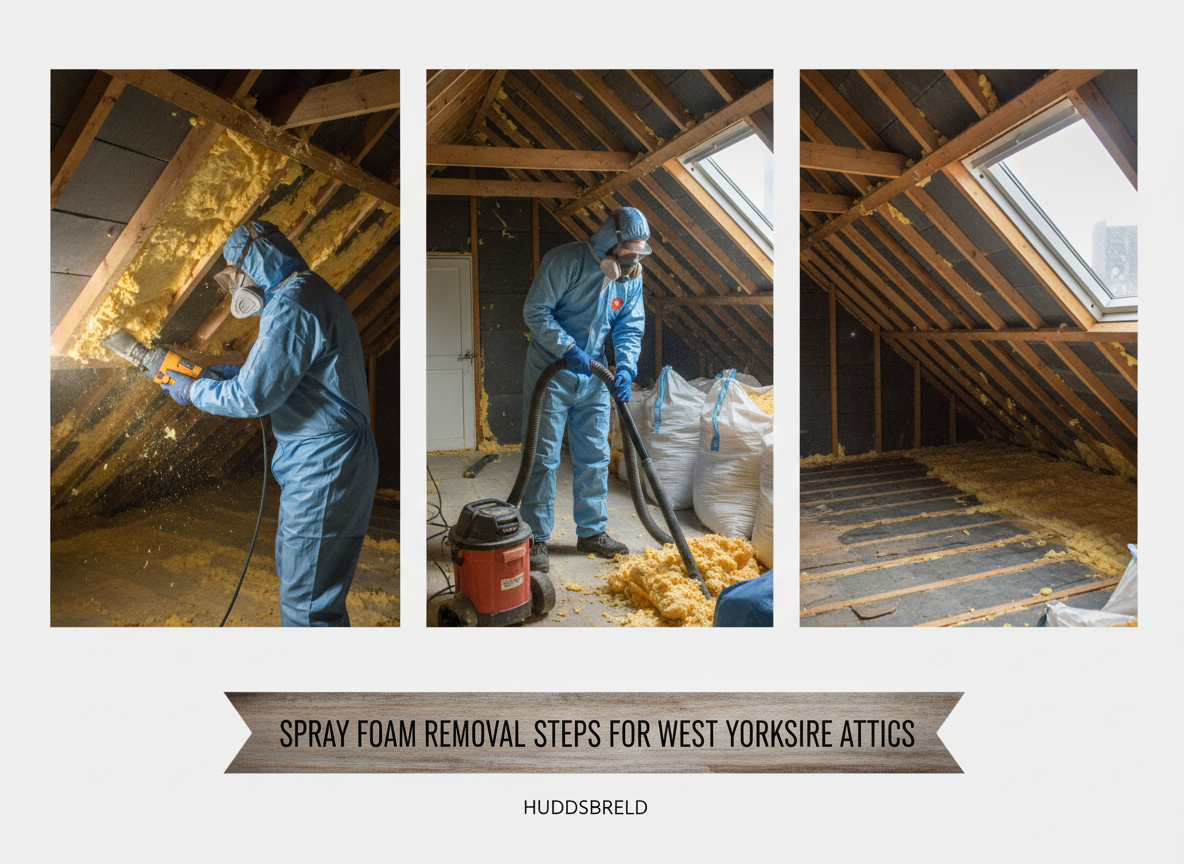
Spray foam removal from West Yorkshire attics follows five main steps: initial inspection, site preparation, technique selection, extraction and final verification. In Huddersfield homes these steps adapt to stone-built terraces and converted mills where limited loft access and past damp problems change the approach. Work typically takes 3-7 days for an average 40-80 square metre attic once the team arrives from 12 Station St Huddersfield HD1 1LN.
Initial Inspection and Assessment
A proper inspection starts with checking for hidden moisture behind the foam, especially in Huddersfield properties built before 1930 where slate roofs and poor ventilation trap condensation. The team measures insulation depth, identifies open-cell versus closed-cell layers and notes any timber decay around rafters. Access points through small loft hatches common in HD1 terraces often require temporary enlargement. This assessment also records wiring and pipe runs that must stay protected during removal. Findings determine whether dry ice blasting or mechanical methods suit the job best and flag any need for follow-up insulation assessment.
Site Preparation and Containment
Preparation protects the rest of the property from dust and debris that can travel through shared chimney stacks in Huddersfield terraces. Plastic sheeting and negative-air machines seal the attic hatch while floorboards below receive drop cloths. Crews clear stored items from the loft space first, a common task in older homes around the town centre where attics double as extra storage. Electrical isolation and temporary lighting come next because many pre-war properties still use original wiring runs. These steps keep the 24/7 Spray Foam Removal team working safely without disturbing neighbours in attached houses.
Selecting the Removal Technique
Technique choice depends on foam type and roof condition. Closed-cell foam often needs mechanical scraping combined with thermal methods, while open-cell material responds better to dry ice blasting that freezes and fractures the insulation without damaging rafters. In West Yorkshire's damp climate, crews avoid water-based cleaning that could worsen existing rot. The process references proven approaches detailed in our attic spray foam removal service and may link to dry ice blasting spray foam removal when the foam sits directly on felt. Each method is tested on a small section before full application.
Execution of the Removal Process
Extraction begins at the highest point and works downward so loosened material falls away from remaining insulation. Hand tools and vacuum systems collect debris into sealed bags for off-site disposal. In converted mill buildings around Huddersfield, crews often work in sections to maintain structural stability of exposed beams. Daily progress checks ensure no foam residue stays lodged in joints where it could affect future ventilation. Weather plays a role too; work pauses during heavy rain because open roof sections can let water reach lower floors in these stone properties.
Final Cleanup and Verification
After removal, the attic receives a full vacuum and wipe-down to eliminate fine particles that could affect indoor air quality. Timber surfaces are inspected for damage and any necessary repairs noted for the homeowner. Final checks confirm the space meets breathability standards before new insulation decisions are made. Homeowners in areas such as Halifax or Holmfirth often review the best time of year for spray foam removal in Yorkshire at this stage to plan follow-up work. The team leaves the site clean and provides a written summary of findings for mortgage or insurance records.